• OFFERS on ALL POWER® Log Cabins, Summerhouses & Sheds • FREE PROFESSIONAL ASSEMBLY on all TGB® Sheds, Summerhouses & Playhouses •

Dip-Treated vs. Pressure-Treated Timber: What’s Right For You?
Firstly, regardless of the treatment used, all the wood we use on our tongued & grooved (t&g) sheds is the highest quality Scandinavian Pine, commonly known as Redwood. This great quality timber is slower growing, denser, stronger, and longer-lasting than the UK grown Whitewood used in budget buildings or overlap sheds. Redwood has a higher resin content, therefore it won’t shrink or swell as much, and there is less chance of dead knots or knot holes appearing in your building. Therefore whether you go with dip-treated or pressure-treated, you’ll get a great building.
Dip-Treated Sheds
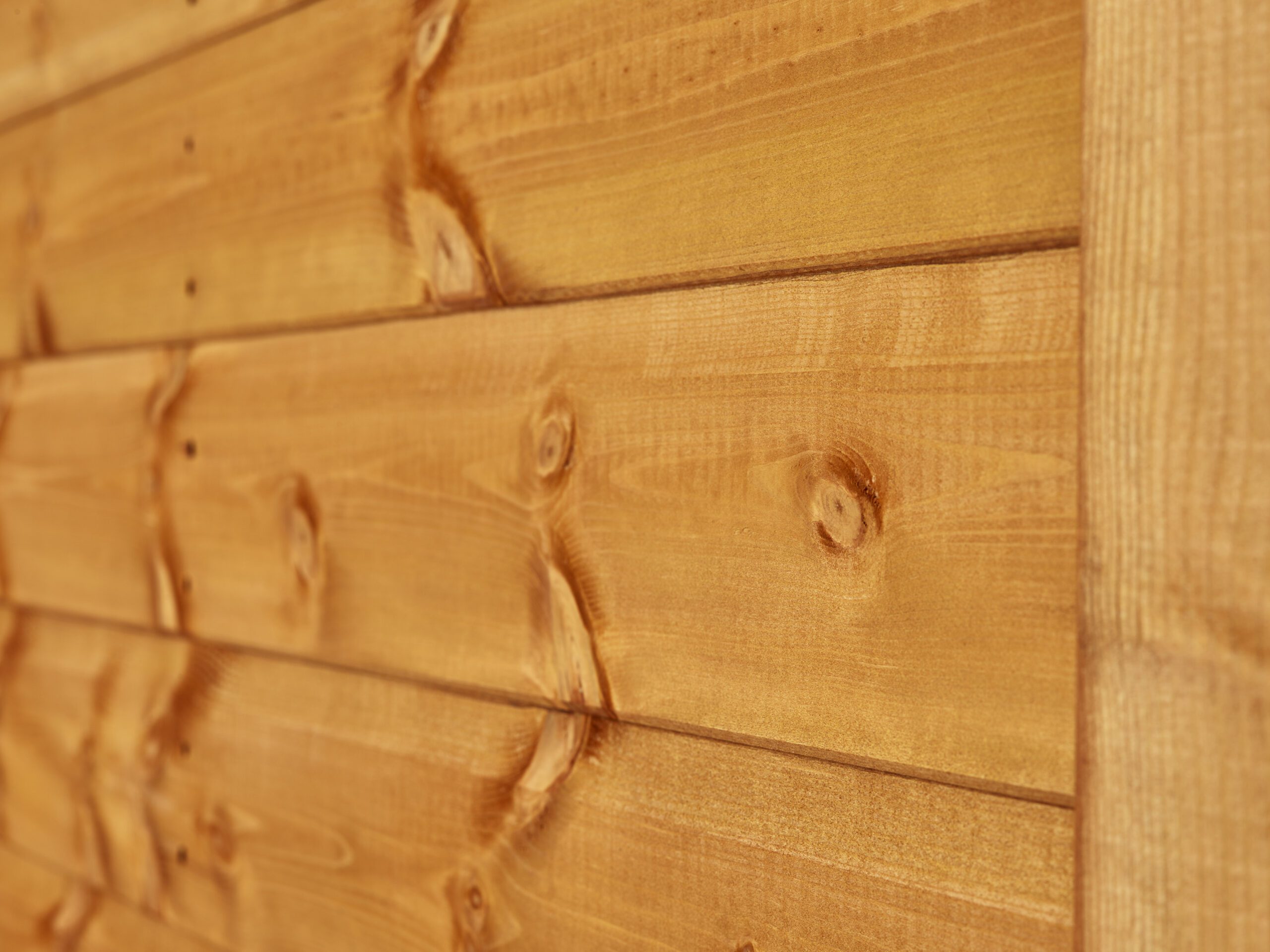
The most popular garden sheds we supply are factory-treated with a water-based, anti-fungal, preservative basecoat as standard. This is the most affordable way to buy a shed with protection.
The dip-treatment sits on the surface of the timber, acting as a primer for a top-coat of your choice, and this normally lasts several months before it starts to degrade, therefore you will need to apply a high quality protection, ideally as soon as possible.
We can supply a factory-applied top-coat so you don’t have to, however for most people, they prefer to do it themselves. Some recommended products include Thorndown, Protek and Jotun which can last up to 12 years, however there are many other good products on the market.
Key Points (dip-treatment):
-
- Known As: Dip-treated, Factory Basecoat, Water-Based Treatment, Primer.
- Lifespan: Protects against rot and insect attack for up to 1 year (exterior) to 5 years (interior).
- Appearance: Typically has a rich brown tint, which fades to dull-brown.
- Safety: Dip-treatments treatments are very safe, environmentally friendly, and are non-toxic for plants, children and pets.
- Advantages: Readily available | Can be painted immediately | Attractive colours | Inexpensive | Suitable for all top-coats | Retains cell structure stability | Some buildings can be upgraded from 12mm to 18mm walls if required, and be factory-painted in a choice of colours.
- Disadvantages: Must be painted with a top-coat or preservative immediately, then subsequently every year | Floors should be raised to reduce the chance of floor decay.
Pressure-Treated Sheds
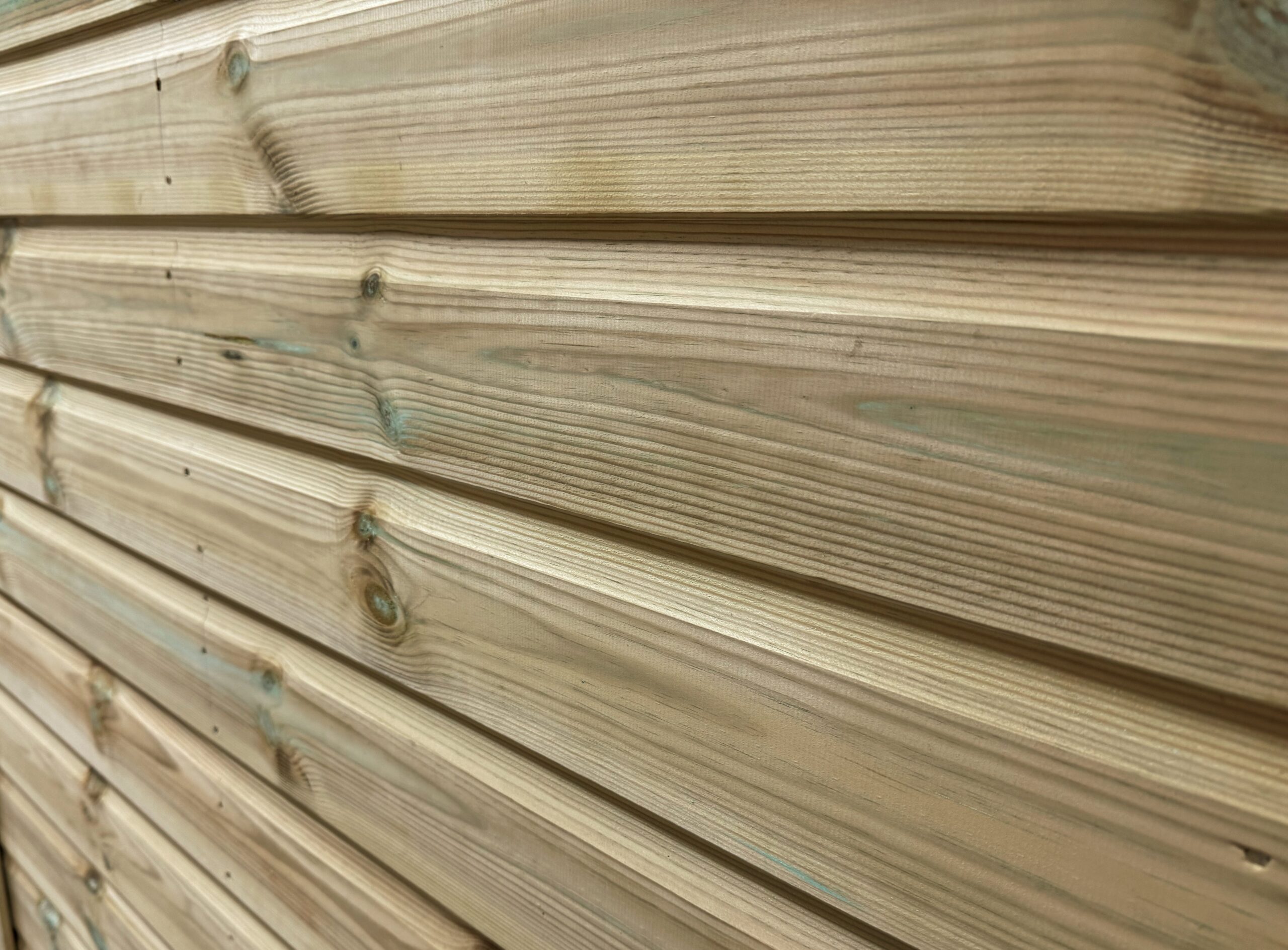
Pressure-treatment is commonly referred to as Tanalised® timber or Tanalith-E treated wood, that has been impregnated with preservative deep into the core of the timber under high pressure.
Pressure-treated timber requires extra handling during the drying/treating process and is therefore more expensive, so it’s mainly used on premium sheds. It is highly durable, resistant to rot, fungal decay, and insect attack, and will generally last for 20-30 years outdoors.
No further treatment is required, however if left untreated, it will start to pull water/dampness into the shed, therefore we highly recommend applying a decorative exterior paint, or a high-quality water-repellent treatment such as Protek Stable Coat or Restol Wood Oil to stop water ingress. This should be reapplied every few years as and when required.
As with all garden buildings, we recommend sealing all end-grain timber to stop damp traveling into the building.
Key Points (pressure-treatment):
-
- Known As: Tanalised® timber, Pressure-treated, Tanalith-E treated timber, green-treated timber.
- Lifespan: Protects against rot, insect attack, and fungal decay for up to 30 years (exterior) or 60 years (interior).
- Common Uses: Premium sheds, garden decking, fence posts, shed bases, and structural landscaping.
- Appearance: Typically has a slightly greenish tint, which fades to the colour of natural timber before eventually turning silvery grey.
- Safety: Tanalith-E treatments are safe when dry, environmentally friendly, and suitable for use around plants, children and pets.
- Advantages: Premium, more robust buildings | Longer-lasting | Won’t rot | Repels insect attack | Ground contact timbers won’t decay for up to 30-years.
- Disadvantages: More expensive than dip-treated | Longer lead times | Sheds can get damp inside if left untreated.
Conclusion
It’s not for us to say which shed will be best for you, as this will very much depend upon your budget, usage, how robust it needs to be, your maintenance regime, styling requirements etc. However, in general, a premium Tanalised® Shed will be more robust and will last significantly longer than a basic dip-treated building, although it will still need maintenance.
If looking for the best of both buildings, then ask us about our Hybrid Sheds which we can supply with thick 18mm dip-treated walls, factory-applied top coat, and a pressure-treated floor up to 18mm thick!
Regardless of whether you decide on a dip-treated or pressure-treated shed, it will be stronger, more robust, longer lasting and more adaptable than a plastic shed or metal shed. Wooden sheds are perfect for our UK climate, and if purchasing one of our TGB or Power garden buildings, you should have many years of use from it.